
Simi Valley Pool Contractor
Swimming Pool & Spa Remodels
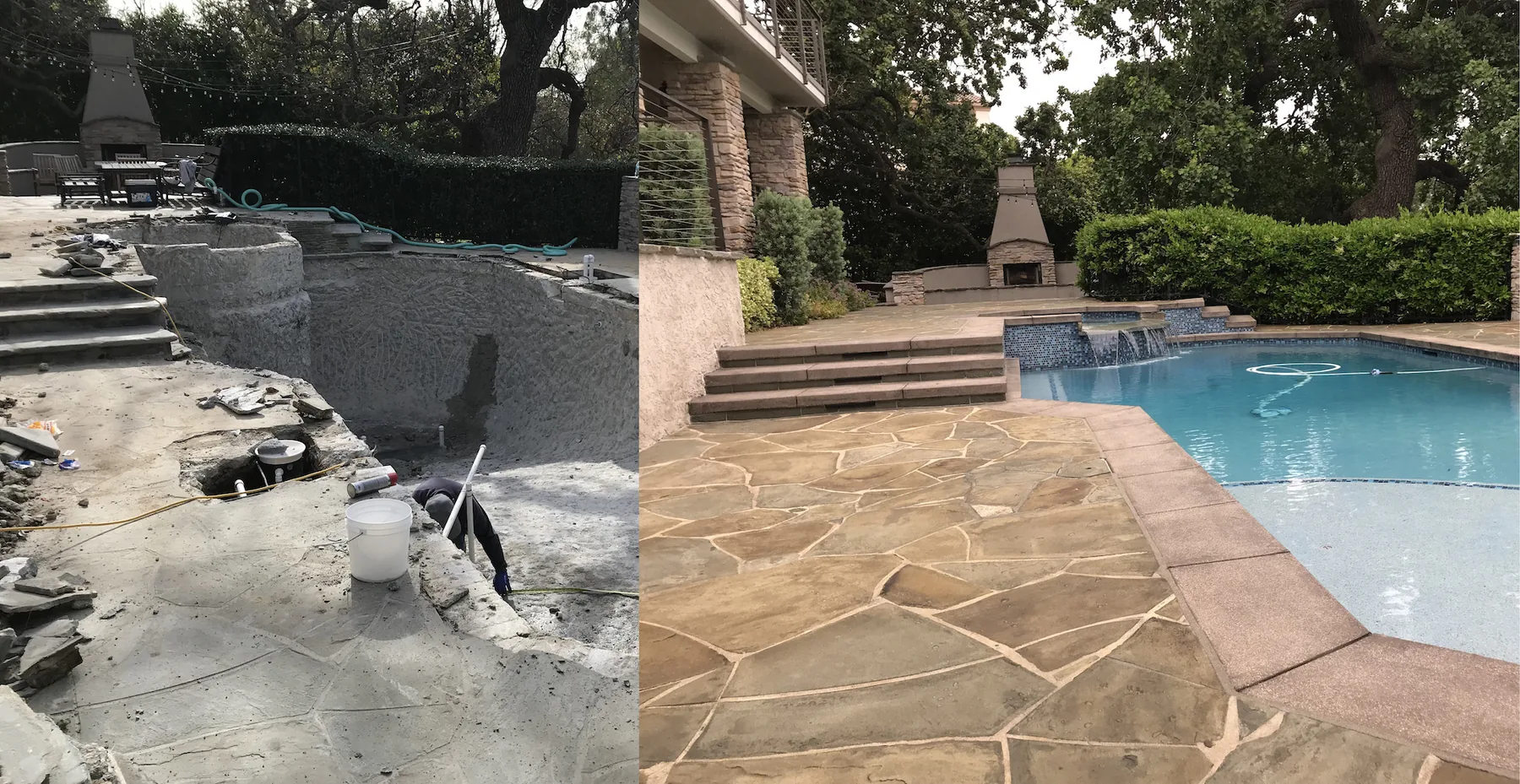
Bring an aging pool back to life with a full remodel: new surfaces, tile, decking, lighting, and modern energy-efficient equipment.
Have a question or ready to get started? Call or text (805) 866-8336 to book your free consultation for an accurate estimate.
If your pool is cracked, stained, dated, or just costing too much to run, a remodel can transform it without the cost of starting over. We handle everything from surface and tile replacement to full reconfiguration of shape, depth, and features.
A lot of remodels pay for themselves in lower energy and chemical costs alone once outdated equipment is swapped for modern, variable-speed and automated systems, on top of the visual and functional upgrade.
Because we can scope a remodel at almost any budget level, from a straightforward resurface to a complete reshaping with new features, we start every project with an honest assessment of what actually needs attention versus what’s optional.
Why It Matters
What to Know Before You Start
Pools built in the 1980s and 90s were designed around different expectations: smaller equipment pads, less efficient pumps, dated tile patterns, and plaster-only interior finishes. A remodel brings an older pool up to current standards without the cost or disruption of a full teardown.
Deferred pool maintenance compounds. A small plaster crack left alone can let water behind the shell and lead to more serious structural repair; a worn-out single-speed pump keeps running up your electric bill every month it’s not replaced.
Beyond function, a remodel is often the single highest-impact way to modernize your backyard’s appearance without touching the footprint of your home, since the pool is frequently the visual centerpiece of the whole outdoor space.
Many of the homes we work on across Ventura County were built decades ago with pools to match, which means a large share of local pools are now well past due for exactly this kind of update, especially around equipment efficiency and surface condition.
What's Included
Everything This Service Covers
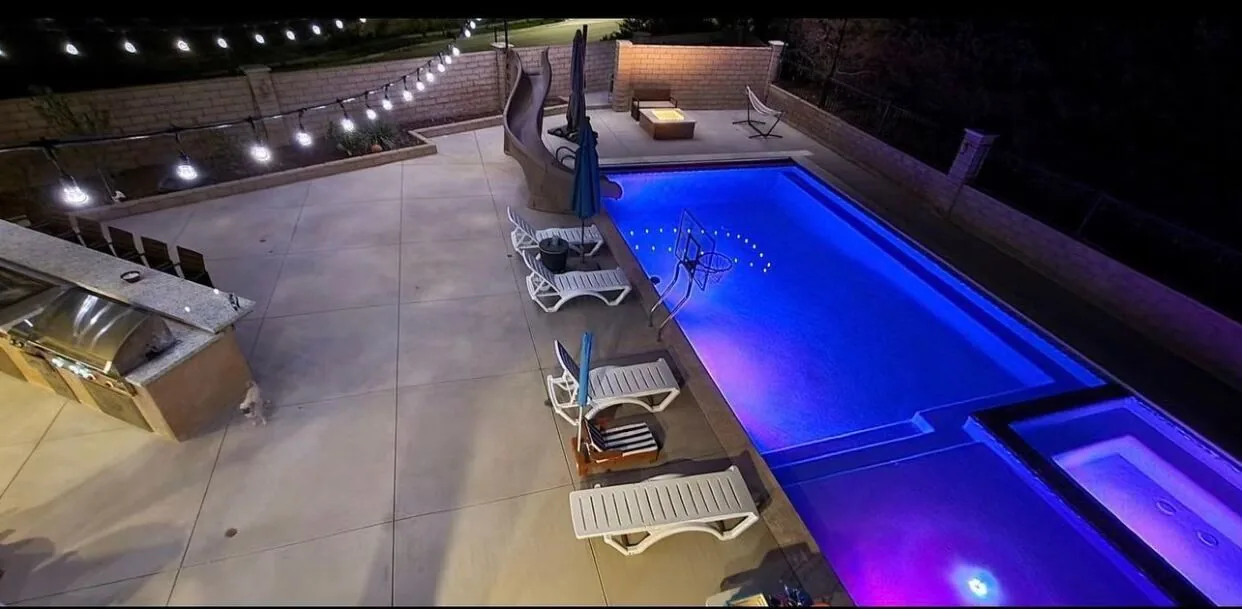
- Pool resurfacing (plaster, pebble, and quartz finishes)
- Tile, coping, and deck replacement or upgrades
- Reshaping, adding tanning ledges, or converting to a saltwater system
- Equipment upgrades: variable-speed pumps, smart automation, heaters
- LED lighting retrofits and added water/fire features
- Crack repair and structural correction
Is It Time?
Signs You Need This Service
- Your plaster is rough, stained, or visibly etched, even after professional cleaning and balanced water chemistry.
- Your pool equipment is more than 10–15 years old and you’ve noticed rising energy bills or frequent repairs.
- Tile is cracking, popping off, or grout lines are deteriorating around the waterline.
- You’ve outgrown the pool’s original design and want a tanning ledge, reshaped steps, or a saltwater conversion.
- You’re preparing to sell and want the pool to show well without the cost of a full rebuild.
How It Works
Our Process
- 1
On-Site Assessment
We inspect your existing shell, tile, decking, and equipment pad to scope what genuinely needs replacement versus what’s still in good shape, and explain the reasoning behind each recommendation.
- 2
Design & Material Selection
You choose finishes, tile, decking, and any new features (lighting, fire elements, reshaping), and we put together a clear, itemized quote broken out by category so you can see exactly where the budget goes.
- 3
Drain & Demo
The pool is drained and the surfaces being replaced are demolished or prepped, while anything staying in place (like existing decking you’re keeping) is protected throughout.
- 4
Rebuild & Install
New surfaces, tile, decking, and equipment are installed to spec. Structural repairs, if any were identified during assessment, are completed before new finishes go on.
- 5
Refill & Balance
We refill the pool, manage the critical first-fill water chemistry that protects new plaster or pebble finishes, and walk you through any new equipment or automation controls.
Materials & Options
What Goes Into the Work
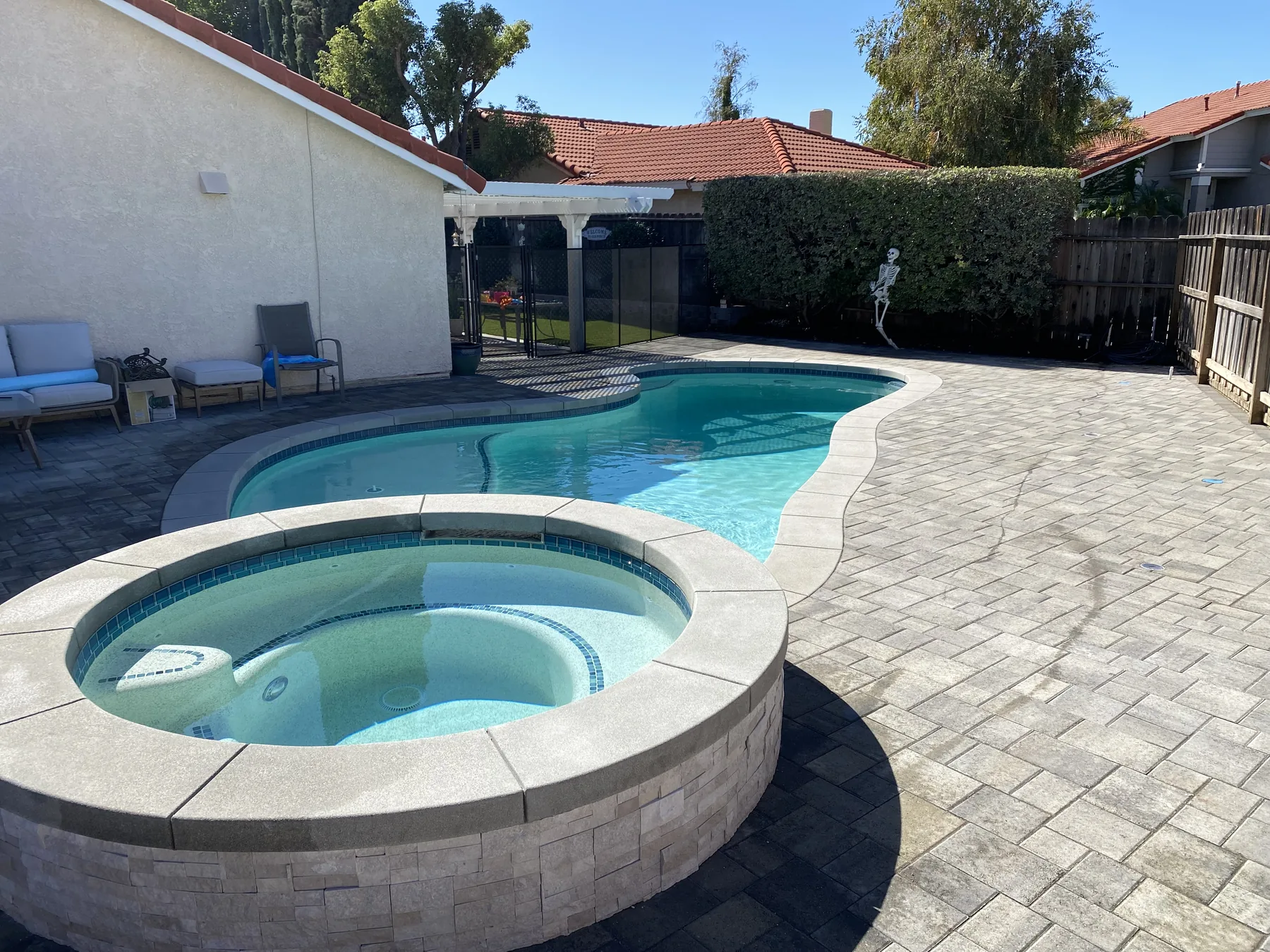
Resurfacing options mirror new construction: marcite plaster for budget-conscious projects, or pebble and quartz aggregate finishes for a longer-lasting, more textured look.
Tile replacement is a common opportunity to modernize a dated look, glass tile and larger-format porcelain have both become popular waterline upgrades over the last decade.
Decking material can often be resurfaced or overlaid rather than fully replaced if the existing slab is structurally sound, which keeps costs down compared to full removal and repour.
Equipment upgrades typically bundle a variable-speed pump, a modern cartridge or DE filter, and Wi-Fi-enabled automation, since these three components work together and are usually most cost-effective to replace as a set.
Coping and waterline tile are often replaced together during a remodel even when only one shows visible wear, since matching old and new materials exactly is rarely possible once product lines are discontinued.
Budgeting
What Affects the Cost
- Scope is the biggest driver: a resurface-only remodel costs meaningfully less than one that also includes reshaping, new tile, and full equipment replacement.
- Access to the pool area affects labor costs the same way it does in new construction, tight side-yard access or extensive existing hardscape to protect both add time.
- Structural repairs discovered during demo (cracks, rebar corrosion) aren’t always visible during the initial assessment and are addressed as they’re found.
- Feature additions like reshaping, a tanning ledge, or a saltwater conversion each add cost on top of a standard resurface, so it’s worth deciding upfront which are must-haves.
- How much of the existing decking and tile you keep versus replace has a meaningful effect on total project cost.
After Your Project
Ongoing Care & Support
Like new construction, a fresh plaster or pebble surface needs a careful first-fill and curing period, we manage water chemistry closely during this window regardless of how long you’ve owned the pool.
If your remodel included new equipment, we’ll make sure you understand the new automation settings before we leave, since they often work differently than whatever you were used to before.
We’re available after the project wraps if questions come up, particularly in the first few weeks as new surfaces and equipment settle in.
Common Questions
FAQs
How do I know if I need a remodel or just a resurface?
If your equipment, tile, and decking are all in good shape and only the plaster is worn or stained, a resurface alone may be enough. We’ll give you an honest assessment during your on-site visit.
Can I change the shape of my pool during a remodel?
Yes. Reshaping, adding a tanning ledge, or extending depth are common remodel additions we can scope during your design consultation.
How long is my pool out of use during a remodel?
A resurface-only remodel typically takes 1–2 weeks; a fuller remodel with reshaping, tile, and equipment work can take 3–6 weeks depending on scope.
Will a remodel fix a pool that’s losing water?
It depends on the cause. If the leak is in the shell or plumbing, we identify and repair it as part of the remodel; if it’s from a separate source (like equipment or fittings), we’ll flag that during the assessment.
Can you convert my chlorine pool to saltwater during a remodel?
Yes, saltwater conversion is a common remodel add-on and is usually straightforward to bundle with equipment upgrades.
Do I need permits for a remodel?
Resurfacing alone typically doesn’t require a permit, but reshaping, structural work, or equipment relocation usually does. We handle any required permitting as part of the project.
Can you match new tile to my existing decking or hardscape?
We can get close, and often use a remodel as an opportunity to update decking alongside tile so everything looks cohesive rather than trying to match materials that may no longer be available.
Is it worth remodeling an older pool instead of just repairing what’s broken?
If multiple systems (surface, tile, equipment) are all aging out around the same time, a coordinated remodel is often more cost-effective than fixing each one separately over several years.
Can you add a tanning ledge to a pool that doesn’t currently have one?
Yes, adding a tanning ledge during a remodel is a common request, though it does involve reshaping part of the shallow end, which adds scope beyond a standard resurface.
Do you offer financing for larger remodel projects?
We can point you toward financing options for larger projects; ask during your consultation and we’ll walk through what’s available.
Explore More
Related Services
Plastering & Resurfacing
Restore your pool’s surface with durable plaster, pebble, or quartz finishes, professionally applied for a smooth, long-lasting result.
Learn more →Equipment Installation
Pumps, filters, heaters, and automation systems we build into pool remodels and new construction, for residential backyards and commercial properties.
Learn more →Retaining Walls & Masonry
Engineered retaining walls, seat walls, and stacked-stone masonry built to hold Ventura County’s hillside and clay-soil lots, not just look good.
Learn more →
Ready to Start Your Pool & Spa Remodels Project?
Get a free, no-pressure quote from a licensed Ventura County pool contractor. Call or text (805) 866-8336 with any questions, or to book your free consultation for an accurate estimate. Financing is available for this project — just ask when you call or text.